GPUs have become a hot topic over the years. Their main purpose is to render visual game data for display on a monitor or projector. There’s also been use for it in parallel computing tasks like mining bitcoin and high data processing. Today I’ll be discussing why GPUs are important, which kind might be best for you and how they’re used for things like mining Bitcoin.
What’s A GPU?
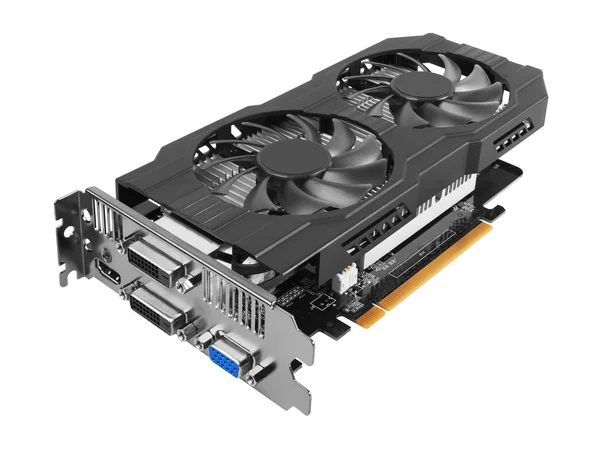
A GPU is a Graphics Processing Unit. It’s functional for both business and personal usage. As stated in the intro paragraph, it’s a processing unit used to create images to output to a connected display device. For most people that would be a monitor or screen. In the future it could be digital paper, or glasses (maybe VR headsets) and more. The higher resolution your monitor will display, the better your GPU needs to be. Though, it is possible to have a high powered GPU and a mid-grade monitor, resulting in mid-grade display. Your GPUs potential is limited by the connected display components. Some may get one or the other, but if the best graphics is your aim, you’ll need a high-end GPU and a high-end monitor.
Why and How are GPUs Important ?
A GPU is important for three common reasons:
- Gaming
- Mining Data/Bitcoin
- Content Creation

It’s some what obvious with modern gaming. The highlight of each new generation of graphics is the granular artistic detail captured on your screen. Whether you’re playing the latest Call of Duty or playing Cyberpunk 2077, your GPU is rendering the engaging and intense parts you love. The action sequences, environment, the physics how everything interacts with each other, all of that rendered in fractions of a second. The high end GPUs can process some games on 4K monitors at 60fps. With the detail and amount of screen real estate that is, it’s incredible!
Mining data and/or bitcoin is a bit nuance of GPU that leverages the architecture for pure data processing. GPUs are built with the capability of doing more simple parallel processing than a CPU can. CPUs are limited by the number of cores it has. For example, the Nvidia GTX 970 GPU has 1664 cores, where as the high end Intel Core i7-6950X CPU has only 10. Ten cores is a fraction of a GPUs potential. CPUs are better at processing more complex instructions requested by operating systems and software. Bitcoin mining relies more on crunching raw numbers quickly en masse. There’s a race against competition to solve an algorithm the fastest. Leveraging so many GPU cores at once makes your probability of being first a lot better.

Content creators would be interested in GPUs for a better/higher quality product for their clients. This would consist of making high resolution videos, music, games and pictures. Again, leveraging the high parallel processing capabilities of GPUs would allow creators to do thing such as splice multiple high-resolution videos together, run preview the creation and make real-time edits with minimal lag. The intense processes would be spread over the numerous available cores to perform. Music could be captured in high definition, recording every minute detail you wish your audience to hear. Subtle intricacies of images can be caught and presented giving your art more realism and/or new perspective(s).
The more detail you want to capture (and fast), the better your GPU will need to be.
The GPU for You

There’s various tiers or groupings of GPUs. Generally it’s: low, mid and high/upper tier. They can be then broken into subgroups of each. The lower the tier, the more affordable it becomes. The drawback is that you won’t be able to get the best graphics out of most things. Though, they can potentially be used still for thing such as mining bitcoin or data. No where near as fast as the upper echelon of GPUs, but still more processing power than a CPU. Example of a lower tier GPU would be the Radeon HD 2400 Pro. This one was made in in 2009. Even 10 years ago, it has 40 streammable cores to use. Another concern could be the core speeds, but the quantity was definitely more. I wouldn’t recommend these for gaming.
Mid tiers are a sweet spot between high end and lower tier GPUs. I generally recommend GPUs in this tier. These are more expensive than the lower tier GPUs, but some are still relatively attainable. You can get pretty good performance out of GPUs in this tier as well. For example, the AMD Radeon RX 5600 XT is one you can find for under $300, if available. This will allow you to play some modern games with medium/average or high settings. You may not get “the” best/max settings, but still very aesthetically appealing. Also has 2304 cores, which makes it a good options for high data crunching as well. Very demanding games at high resolution might give it trouble but it is capable of running most games at 1080p resolution.
The high end, upper echelon GPUs are for the gamming enthusiast and data processing power users. These beast of GPUs can crank out intense graphics and data with minimal, if any, problem. The latest of Nvidia’s GPUs is the RTX 3090. This goliath possesses 10496 cores, with 24GB of memory. The importance of the memory is that it allows saving of temporarily needed information for further processing. The more you have the better. The base price starts at $1499. These are in very high demand and the quantity is not meeting the demand. The demand is driving the price up to well over $2000 on aftermarket sites. The only existing bottleneck with this GPU would be the the monitor and maybe storage, depending on the application.
There also exists a hybrid of a CPU and GPU component. It’s commonly referred to as an APU and CPU with integrated graphics. APU stands for Accelerated Processor Unit. APUs are AMD brand specific. CPUs with integrated graphics are what Intel call their CPU with graphics processing capabilities. These are not the best for anything intensive honestly. The APU doesn’t shine in performance in respect to CPU or GPU power. They do though, have less power consumption and designed for less intensive systems. It is good for low budget needs and/or when a GPU is not available. They could be an intermediate solution for someone until they can afford the higher tier CPU and GPUs they desire. Though the performance will not be of the best, it should not be a discarded option. If you want a machine to do small simple tasks, this could be something useful to you.
Summary
GPUs are in high demand right now. Their data crunching power is wielded by scientist and potential bitcoin millionaires to enhance their lives. They’re visual and audio esthetics they can provide to creators and users make them a desirable piece of equipment. Hopefully this article helps you better understand your GPU needs for a system you have or plan to build.
Cordell Kennerly

Cordell Kennerly has worked in various capacities of Software Development and Engineering for over 10 years. In parallel with gaining experience in software development, he has experience with RDBMS and No-SQL databases, and software deployment, PC building and Security
0 thoughts on “Painting a Picture with GPUs”